

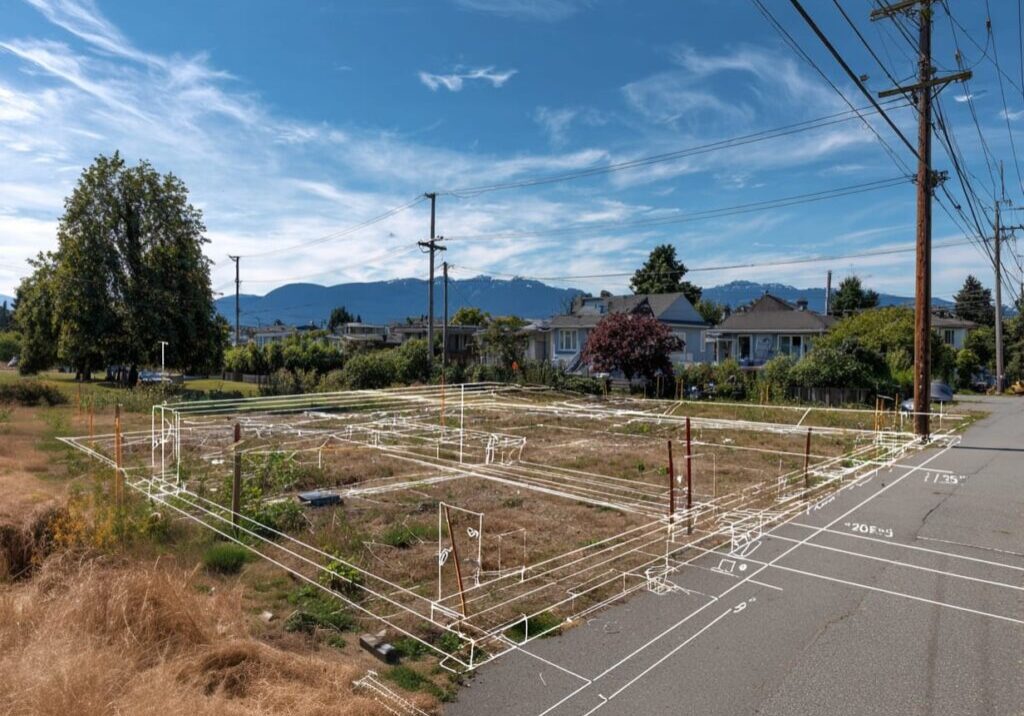
Before you buy land for a custom home, confirm 5 things: what you can build, what title restricts, how servicing will work, what the site will cost to develop, and what approvals will shape your timeline. Most “surprises” show up after subjects are removed, when fixes get expensive and options get limited. If you want a practical feasibility review before you commit, a custom home builder can help you validate the lot, flag risks, and map next steps.
This guide is written for Greater Vancouver buyers looking at vacant lots or teardowns in Vancouver, Burnaby, Richmond, Surrey, Langley, Coquitlam, Port Moody, Delta, Ladner, White Rock, and New Westminster. It’s not legal or engineering advice. It’s a plain-language checklist so you can ask better questions.
At A Glance: The Land Due Diligence Checklist
A good lot purchase is rarely about “finding the perfect parcel.” It’s about confirming the lot can support your home, your budget, and your schedule without hidden constraints.
Use this checklist to stay focused while you’re in the offer stage:
- Check zoning and permitted uses (plus any overlays)
- Confirm setbacks, height, lot coverage, and parking rules
- Review title for easements, rights-of-way, and restrictive covenants
- Verify lot dimensions and boundaries (survey reality vs listing photos)
- Confirm water, sewer, storm, and electrical servicing assumptions
- Identify slope, soil, drainage, and retaining wall risk
- Check trees and likely protection or replacement requirements
- Consider contamination history and prior site uses
- Understand the permit path and approvals likely required
- Build a real “land + build” budget, not just purchase price
Here’s a simple way to think about it: your purchase price is only one line item. The lot’s constraints determine how much you’ll spend on design, approvals, site work, and schedule buffers.
| Check | Why It Matters | Who Confirms It |
| Zoning + Use | Determines what you’re allowed to build | City tools + designer/builder |
| Title Restrictions | Can reduce buildable area or add obligations | Lawyer/conveyancer |
| Survey / Boundaries | Confirms real dimensions and grades | Surveyor |
| Servicing | Can add cost and time for connections/upgrades | City + builder/utility |
| Slope / Drainage | A major driver of excavation and retaining | Builder + consultants |
| Trees | Can force footprint changes or added requirements | Arborist + builder |
| Permit Path | Affects timeline and feasibility | Builder + city guidance |
| Budget Reality | Prevents “great lot, impossible build budget” | Builder + designer |
Step 1: Confirm What You Can Build Before You Draw It

Land due diligence starts with feasibility, not inspiration images. If you fall in love with a floor plan before you confirm zoning and constraints, you can end up redesigning repeatedly or buying a lot that can’t support what you want.
The goal is simple: confirm the home you want is realistic on the lot, in that municipality, under that zoning.
Start With Zoning, Not Floor Plans
Zoning tells you what is allowed, what is restricted, and what will take extra approvals. It can control use, building size, height, setbacks, and sometimes even form and massing. This is why “a similar home down the street” is not proof. Similar-looking homes can sit on different zones, different lot sizes, or older approvals.
If you want an explainer of what zoning bylaws do and why they matter, the Province of BC zoning overview is a helpful starting point.
Verify The Building Envelope: Setbacks, Height, Lot Coverage
Once you know your zone, confirm the “envelope” that shapes your home: setbacks, height limits, and lot coverage. These rules affect more than aesthetics. They can drive excavation depth, stepbacks, garage placement, and whether a suite or secondary building is feasible.
If the home you want only works with relaxations or variances, plan for more review time and more design iterations. That doesn’t mean you should walk away. It means you should price the risk and confirm the likely approval path before you commit.
Use City Tools To Check Zoning Boundaries And Context
Most Greater Vancouver municipalities have public maps and tools that let you confirm zoning and overlays at the address level. That’s often the fastest “first pass” before you pay for deeper consultant work.
As an example of the type of tool you should look for, Vancouver provides a public zoning map you can use to check zoning boundaries and context.
Step 2: Read The Title For Restrictions That Can Change Your Design

Title is where many “deal” lots quietly become expensive. A lot can look perfect on a walk-through, but the paperwork can limit where you build, where you connect services, or what you’re allowed to change.
Your lawyer or conveyancer should guide this review. Your builder and designer should understand how the restrictions affect layout, excavation, and servicing.
What Title Review Usually Reveals
Title documents can include easements, statutory rights-of-way, restrictive covenants, building schemes, and other charges. These can limit building locations, restrict grades, reserve areas for servicing, or impose conditions on what you can do in the future.
A clean title does not guarantee a simple build, but it removes a major category of surprise. If restrictions exist, you want to understand them early enough to adjust the design or walk away before you’re committed.
Why This Matters For Layout, Excavation, And Servicing
Title restrictions can reduce buildable area without being obvious on site. A right-of-way can remove part of your backyard from use. A covenant can limit how close you can build to a boundary. An easement can dictate where services must run, which can affect excavation planning and costs.
In practical terms, title constraints can force a narrower footprint, change driveway placement, or require additional engineering. This is why a title review is not “paperwork for later.” It is a design input.
Know Where Land Title Records Live In BC
BC uses a land title system administered through the Land Title and Survey Authority, and the Province provides an overview of the land titles and surveys framework that’s useful if you’re new to the process.
Step 3: Understand Servicing And Access Before You Assume Normal Build Costs

Servicing is one of the biggest swing factors for land feasibility. The listing rarely tells the full story, and assumptions like “it’s in the city, so it’s easy” can be wrong.
The goal here is to confirm what exists today, what needs to change, and what the construction logistics look like for that specific lot.
Water, Sewer, Storm: What You Need To Confirm
Confirm whether the lot is serviced, partially serviced, or will require new connections and potential upgrades. Water, sanitary sewer, and stormwater assumptions affect cost, schedule, and sometimes even where you can build. Unknown service locations can also change excavation scope and site planning.
If you’re buying a teardown, confirm whether existing connections are usable for your new home scope. If you’re buying vacant land, confirm where services will come from and what conditions the municipality requires.
Power, Gas, And Telecom: Plan For Realistic Routing
Even when services are available, routing and capacity can be complicated on corner lots, lots with tight access, or lots with existing constraints on the frontage. Power requirements can also change when you move to higher-efficiency mechanical systems, add EV charging, or plan a larger home.
A simple way to reduce risk is to confirm your “must-haves” early, including mechanical approach and future-proofing, so service planning doesn’t get revised late.
Access, Driveway Location, And Construction Logistics
Driveway location, lane access, and frontage constraints can affect more than curb appeal. They can affect where staging happens, where bins go, how excavation equipment enters the site, and how materials get delivered.
In Greater Vancouver, tight lots and narrow streets can create real logistics challenges. If access is constrained, factor that into schedule buffers and site planning early, not after you’ve removed subjects.
Step 4: Check The Land Itself: Slope, Soil, Drainage, Trees, And History

This is where budgets are won or lost. Two lots with the same purchase price can have drastically different build costs because the land behaves differently under excavation, drainage, and foundation design.
You don’t need to become a geotechnical expert. You do need to understand which conditions typically add cost and time so you can plan accordingly.
Topography And Excavation Risk
A lot can look flat and still build “hard” because of grades, drainage patterns, or access constraints. Slopes often increase excavation complexity and can trigger retaining walls, stepped foundations, and more intensive drainage planning.
If the lot has visible grade changes, unusual retaining, or signs of water movement, treat that as a signal to do deeper due diligence before you commit.
Geotechnical And Drainage: The Quiet Budget Drivers
Soil conditions, groundwater, and drainage constraints can change foundation requirements, excavation methods, and waterproofing details. Even when everything is buildable, the cost difference between “simple soil” and “complex soil” can be meaningful.
The right approach is to identify the risk early and budget for it honestly. If you wait until design is advanced, changes can be expensive and can also delay permitting.
Trees And Site Constraints That Change The Footprint
Large trees can reduce buildable area because of root zones and protection requirements. They can also affect where you place a driveway, how you stage construction, and how you manage drainage. On many lots, the most efficient footprint is the one that respects existing constraints rather than fighting them.
If a lot’s value depends on keeping certain trees, confirm what that means for your footprint before you buy. It’s far easier to design around trees early than to redesign once you’re committed.
Contamination And Prior Uses
Most residential lots are straightforward, but some sites carry additional risk based on prior use. If a lot has a history of industrial activity, commercial maintenance, unknown fill, or anything that raises questions, it’s worth doing deeper due diligence.
The Province of BC provides information on accessing site remediation and site information resources, which can help buyers understand what to check when contamination risk is a possibility.
Step 5: Map The Permit Path Before You Buy

Permits affect land feasibility because they shape sequence, timing, and documentation. The mistake is assuming permits are a “later problem.” In reality, permit complexity often determines whether a lot is a good fit for your timeline and budget.
Your goal at the land stage is not to produce final drawings. It’s to understand the likely approval path and where delays typically come from.
Development Permit Vs Building Permit: Why Sequence Matters
Some projects go straight to building permit. Others require additional approvals first, depending on zoning, scope, and municipality. If your home concept needs relaxations, special reviews, or additional permit steps, you want to know that before you buy.
If you want a simple overview of the permit sequence most custom homes follow in Metro Vancouver, this guide lays out the path.
Municipal Differences Across Greater Vancouver
Every municipality has its own checklists, fees, review patterns, and supporting document requirements. A lot in Vancouver can behave very differently than a lot in Surrey or Coquitlam, even if the purchase prices are similar.
The practical move is to confirm requirements at the city level early. Even a quick review of the municipality’s online guidance can help you identify whether the lot will need extra steps, extra reports, or extra time.
Timeline Reality: Permitting Plus Construction Is One Schedule
Permitting and construction are not separate timelines. They are one schedule with dependencies. If the permit path is complex or decisions are slow, construction start shifts. If long-lead items are not planned, lock-up and finishing shift. That’s how “a small delay” becomes “we lost a season.”
If you want a bigger-picture view of how long custom homes typically take door-to-door in Greater Vancouver, this custom home timeline overview helps you plan with realistic phases.
Step 6: Build A Real Budget For The Lot, Not Just The Purchase Price
Land feasibility is a budget exercise as much as a design exercise. A lot can be “buildable” and still be the wrong choice if the soft costs and site costs push the total project beyond what you planned.
The right mindset is “land plus build,” not “land first, we’ll figure it out later.” Later is where costs spike.
Soft Costs Buyers Forget
Soft costs can include surveys, engineering, energy planning, permit fees, and consultant reports tied to the lot’s constraints. These costs aren’t optional if you want a permit-ready plan and a predictable build.
If you’re buying land and also trying to keep a firm budget, you want these categories identified early so your purchase decision doesn’t accidentally create a budget squeeze.
Site Prep And Unknowns That Need A Buffer
Site prep is where hidden costs often live: demolition, excavation, soil export, drainage management, retaining, servicing changes, and access logistics. These can vary widely between lots, even within the same neighbourhood.
A smart buffer is tied to risk. If the lot is steep, has unknown drainage, or has heavy constraints, your buffer should reflect that. If the lot is simple and well-serviced, your buffer can be more modest.
Why Allowances And Finish Level Still Matter
Even at the land stage, your finish level matters because it affects the total project budget. A high land price paired with high-end finishes can be a tough combination if you don’t plan it early.
A practical approach is to define your priorities before you commit. If the lot consumes more budget than expected, you can adjust scope and finishes intentionally, instead of making rushed compromises mid-build.
Step 7: Write Smarter Subjects And Conditions For A Land Purchase
Subjects are your safety net. A strong subject period gives you time to confirm the deal-breakers and price the risks. A weak subject period turns land buying into a gamble.
You don’t need to overcomplicate your offer. You do need to protect the right checks.
Why Subject To Due Diligence Is Your Best Friend
A subject to due diligence condition buys you time to confirm zoning, title restrictions, servicing, and site risks. It also gives you time to consult the right people so you’re not guessing.
If you’re serious about a lot, treat due diligence as an investment. The cost of good due diligence is small compared to the cost of buying a lot that can’t support your home or your timeline.
The Practical Due Diligence Package To Request
Ask for documents and information that reduce uncertainty:
- Title search and any supporting documents (covenants, easements, rights-of-way)
- Any available surveys, plans, or prior reports
- Utility and servicing information (where available)
- Municipal notes or known requirements tied to the property
- Any known constraints (trees, drainage issues, access restrictions)
You are not trying to gather everything. You are trying to gather enough to answer the real question: “Is this lot a fit, and what does it change in budget and schedule?”
When To Walk Away
Walking away can feel painful in the moment, but it can save the entire project. Calm red flags include unclear access, major title restrictions that reduce buildable area, servicing uncertainty that can’t be resolved within subjects, and site constraints that force a home you don’t want.
If the lot requires major compromises before you’ve even designed the home, it’s often a sign you should keep looking.
Step 8: Bring In The Build Team Early To De-Risk The Lot
If you’re buying land for a custom home, the best time to involve the build team is before you buy, not after. Early input helps you confirm feasibility, budget drivers, and permit path assumptions while you still have leverage.
This doesn’t need to be a long process. Even a focused feasibility review can prevent expensive mistakes.
What A Builder-Led Feasibility Review Should Cover
A builder-led feasibility review should identify constraints, risk areas, and the likely sequence of approvals and site work. It should also translate “lot issues” into real-world impacts, like excavation complexity, retaining requirements, servicing assumptions, and schedule dependencies.
You’re not looking for perfect certainty at this stage. You’re looking for clarity on what is controllable, what is variable, and what you need to confirm before committing.
How Preconstruction Turns Risk Into A Plan
Once the lot is confirmed, preconstruction turns open questions into a plan: surveys, coordinated drawings, permit-ready documentation, and a schedule that ties decisions to procurement and approvals.
If you want a view of what preconstruction should include and why it reduces surprises, this guide breaks down the process.
How Mavish Homes Helps You Buy Land With Fewer Surprises
Buying land is where your custom home budget and timeline are set, even before design begins. Our role is to help you validate feasibility early, flag the constraints that change cost and approvals, and map a path that fits your lifestyle and priorities.
We do that with disciplined planning and clear accountability. When scope is defined, we use a fixed-price contract model to reduce midstream churn. We publish a detailed build schedule that includes the real dependencies, and we keep communication tight through a client portal with daily logs and progress photos so decisions don’t stall the process.
If you’re looking at a specific lot, we can review the listing details, talk through constraints, and outline what to confirm during subjects. Book a consultation with Greater Vancouver custom home builder and we’ll help you decide whether the lot supports the home you want to build. Frequently Asked Questions
Frequently Asked Questions
How Do I Know What I Can Build On A Lot In Greater Vancouver?
Start with the lot’s zoning and confirm the rules that shape the building envelope: setbacks, height, lot coverage, and any overlays or guidelines. Then confirm requirements for that specific address in that municipality. Don’t rely on nearby homes as proof.
What Title Items Should I Watch For When Buying Land?
Watch for easements, statutory rights-of-way, restrictive covenants, and other charges that can limit where you build or how you service the home. These items can change layout, excavation, and driveway planning, even if the lot looks perfect in person. Your lawyer or conveyancer should confirm what applies and what it means for your purchase conditions and plans.
What Does Servicing Mean And Why Can It Change My Budget?
Servicing is your water, sanitary sewer, stormwater, power, and other utility assumptions. If servicing locations are unknown, or upgrades are required, your site work and schedule can change quickly. A builder-led feasibility review helps because it turns “unknown servicing” into a plan and a budget allowance before you commit.
Should I Get A Geotechnical Review Before Buying A Lot?
If the lot has slope, signs of drainage issues, unknown fill, or unusual retaining, early geotechnical input can prevent major surprises later. You may not need a full report at the offer stage, but you should at least identify whether the lot is likely to require more complex foundation or drainage planning. The key is to match your due diligence effort to the lot’s risk profile.
What Are Red Flags That A Lot Will Be Hard To Build On?
Common red flags include unclear access, heavy slope, evidence of ongoing drainage problems, significant title restrictions, major tree constraints that reduce buildable area, and uncertain servicing that can’t be clarified during subjects. None of these automatically kill a deal. They simply need to be priced and planned early, before you commit.
How Do Permits Affect Land Feasibility?
Permits affect land feasibility because they determine sequence and documentation. Some scopes require additional approvals before you can apply for a building permit, and that can change your timeline.
Can Mavish Homes Review A Lot Before I Write An Offer?
Yes. We can review the listing, talk through the municipality and lot constraints, and help you build a practical due diligence plan for your subject period. The goal is to identify deal-breakers early and prevent expensive surprises after you’re committed.